
The Brief: Nations Are Rebuilding Industrial Security Across Minerals, Energy, and Mobility
Written by: Woods Hobbs, Policy Fellow
This week’s EarthHQ Global Brief reflects a decisive shift from expansion narratives to structural recalibration. Across minerals, energy, mobility, defense, and macro policy, governments and firms are no longer optimizing for speed of transition but for durability of position. From Indonesia managing nickel output and Japan testing deep-sea rare-earth extraction, to U.S. defense procurement reshaping coal demand and Stellantis writing down aggressive EV bets, the signal is consistent. Control of supply, balance sheet strength, and system reliability are replacing aspirational targets as the core drivers of strategy in 2026.

Japan Claims Deep-Sea Rare-Earth Breakthrough: Japan has successfully conducted the first continuous retrieval of rare earth bearing seabed mud from depths of 6,000 meters near Minamitori Island, signaling a potential breakthrough in deep-sea mineral extraction.
Minerals:
Africa Reframes Minerals as Systems, Not Sites
The Africa Finance Corporation’s 2026 Compendium positions Africa’s estimated $29.5 trillion mineral endowment not as a resource catalogue but as a systems level industrial strategy, arguing that value is unlocked only when minerals are embedded in power, transport, and regional demand clusters. With $8.6 trillion undeveloped and supply chains increasingly concentrated in China across manganese, rare earths, and graphite, the report frames Africa’s opportunity as selective geo economic integration rather than indiscriminate extraction. The central thesis is structural: geology alone does not create leverage, but infrastructure, data transparency, and anchored regional demand can convert mineral wealth into durable industrial capacity.
Read the full report here.
Deadly Insurgency Threatens U.S. Critical Minerals Strategy in Pakistan
The United States’ $1.25 billion commitment through the Export–Import Bank to Pakistan’s Reko Diq copper and gold project marks a strategic attempt to counter China’s entrenched position in Balochistan, a province already shaped by decades of insurgency and nearly $70 billion in Chinese investment. But coordinated January attacks by the Baloch Liberation Army, which killed dozens across multiple towns, exposed the central constraint on Western mineral diversification: security risk is no longer peripheral, it is foundational. While Islamabad frames this as a test of its ability to guarantee foreign investment and scale mineral exports from roughly $2 billion toward $6 to $8 billion annually, the deeper signal to markets is structural. Access to reserves is insufficient without territorial control, local legitimacy, and credible state capacity. For Washington, Balochistan is not simply a copper play. It is a stress test of whether U.S. capital can operate in contested regions where China already has infrastructure, relationships, and risk tolerance embedded on the ground.
Read the full article here.
Japan Claims Deep Sea Rare Earth Breakthrough
Japan has successfully conducted the first continuous retrieval of rare earth bearing seabed mud from depths of 6,000 meters near Minamitori Island, signaling a potential breakthrough in deep sea mineral extraction. The mud is believed to contain key elements such as dysprosium and neodymium, essential for EV motors and advanced technologies. If commercially scalable, this move would reduce Japan’s dependence on China’s rare earth dominance and further accelerate the global shift toward sovereign mineral security strategies.
Read the full article here.
U.S. Expands Rare-Earth Footprint into Mozambique
The U.S. Trade and Development Agency has confirmed support for Altona Rare Earths’ Monte Muambe project in Mozambique, triggering a 76% surge in the company’s share price and signaling Washington’s continued push to diversify rare earth supply beyond China. The project targets magnet critical elements alongside fluorspar and gallium, positioning it as both a defense relevant and industrial minerals play. With a 25 year mining license and a prefeasibility study underway, Monte Muambe reflects a broader U.S. strategy of de risking early stage projects in frontier jurisdictions to build alternative supply chains at scale.
Read the full article here.
Indonesia Tightens Nickel Supply to Rebalance the Market
Nickel prices rose after Indonesia ordered a steep quota cut at Weda Bay, the world’s largest nickel mine, slashing its 2026 cap to 12 million tonnes from 42 million tonnes in 2025 as part of a broader national reduction of more than 100 million tonnes in output. Jakarta, which now accounts for roughly two thirds of global nickel supply, is deliberately constraining production to reverse years of oversupply that depressed prices and squeezed margins across the industry. The move underscores Indonesia’s evolution from volume maximizer to price manager, using quotas and downstream policy to consolidate pricing power in a metal central to stainless steel and EV battery supply chains.
Read the full article here.
Mobility:
Jeep Maker Stellantis Reverses Course on EV Overreach
Stellantis, the parent company of Jeep, is taking roughly $26 billion in charges after overestimating U.S. demand for electric vehicles, one of the largest write‑downs of the EV transition era, as automakers pivot back toward hybrids and conventional engines. The reset reflects weakening consumer appetite, policy rollbacks on EV incentives, and the financial strain of prematurely scaling supply chains. Strategically, the move signals a broader industry shift from ambition-driven electrification targets toward demand-aligned, capital-disciplined product portfolios.
Read the full article here.
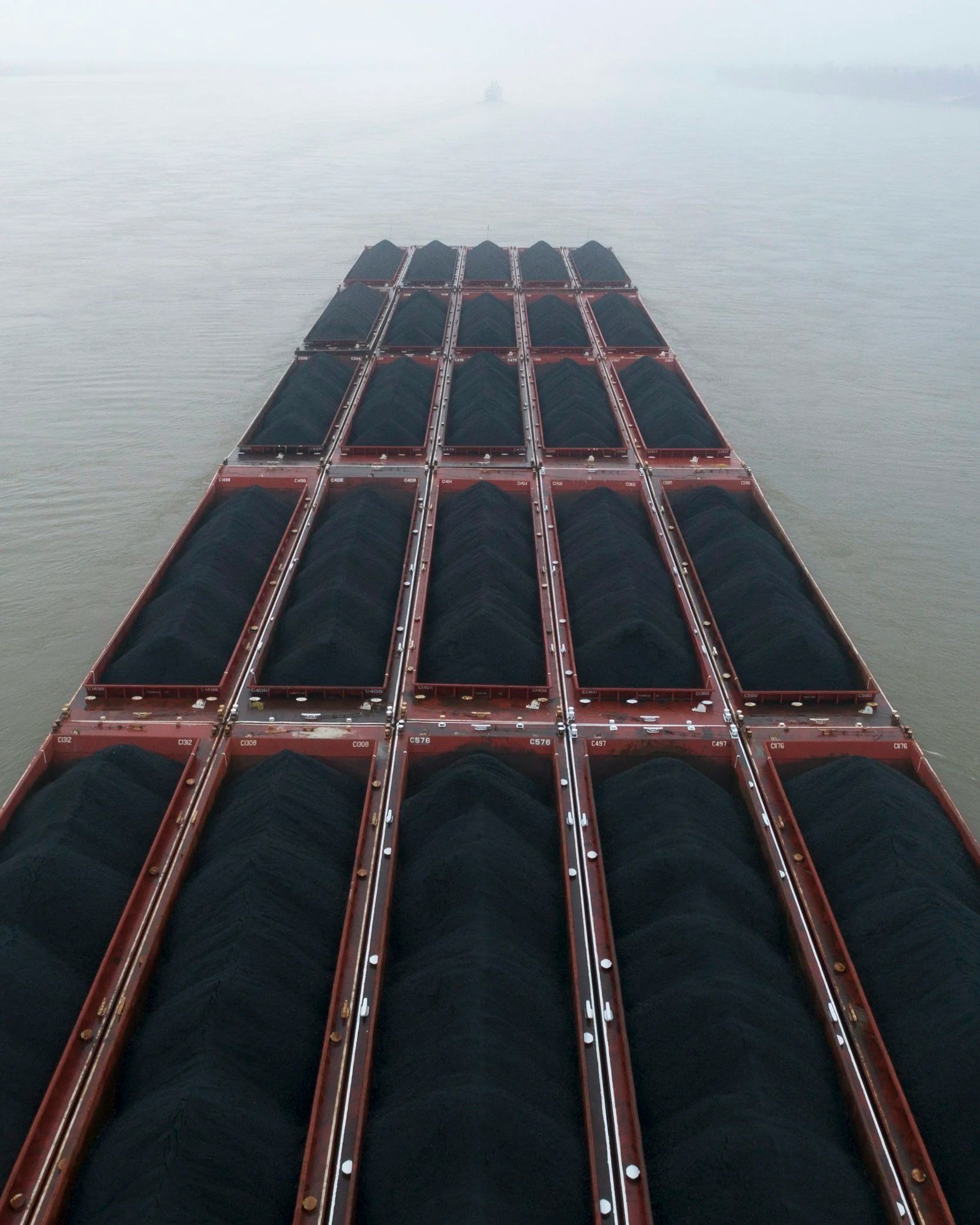
Baseload as Geopolitics: The U.S. move to anchor defense facilities in coal‑generated power reflects a broader global shift toward resilience‑first energy strategy.
Energy:
BP Halts Buybacks as it Refocuses on Oil and Gas
BP has suspended its quarterly share buyback and cut 2026 capital expenditure as it pivots back toward oil and gas after an underperforming push into renewables. With net debt above $22 billion and profit trailing peers, the company is prioritizing balance sheet repair and cost reductions over shareholder returns. The move reflects a broader energy sector divergence, as firms recalibrate capital allocation amid volatile oil prices and a more politically fragmented energy transition.
Read the full article here.
Washington Turns to Coal to Bolster Defense Infrastructure
President Donald Trump has ordered the Department of War to purchase coal-generated electricity and allocated $175 million to extend the life of coal plants in five states, framing the move as a national security measure tied to grid resilience and rising AI-driven power demand. The directive uses Cold War–era authority to channel federal procurement toward stabilizing an oversupplied coal sector, signaling a more interventionist energy posture. Strategically, the move reflects a broader shift toward reliability-first power policy, even as critics argue it risks higher costs and legal challenges.
Read the full article here.
Deals:
Offshore Consolidation Signals Drilling Upcycle
Transocean’s $5.8 billion all-stock acquisition of Valaris will create a 73-rig offshore giant with an implied $17 billion enterprise value, positioning the combined firm to capture what executives call a multi-year offshore drilling upcycle. The deal reflects renewed confidence in deepwater demand and continued consolidation as operators seek scale, cost synergies, and basin diversification. Strategically, it signals that offshore oil is re-entering capital markets as a disciplined growth play rather than a stranded asset narrative.
Read the full article here.

Signals of Strength: A 130,000‑job gain and lower unemployment complicate the case for early Federal cuts and lift global yield expectations.
Market Watch:
U.S. Labor Market Beats Expectations
The U.S. economy added 130,000 jobs in January, nearly double expectations, while unemployment edged down to 4.3%, signaling firmer labor conditions despite recent soft private-sector data. The upside surprise has reduced expectations for near-term Federal Reserve rate cuts and pushed Treasury yields higher, reinforcing a higher-for-longer monetary outlook. Strategically, the data suggests continued economic resilience, complicating both rate policy timing and political pressure for looser financial conditions.
Read the full article here.
Global Reflection
The common thread across this week’s developments is not retreat. It is discipline. Indonesia is asserting price power in nickel. Japan is attempting to rewrite geological constraints through technology. The U.S. is underwriting mineral projects in Mozambique while simultaneously stabilizing domestic coal demand through defense procurement. BP is pivoting back to hydrocarbons to repair its balance sheet. Offshore drillers are consolidating in anticipation of a sustained upcycle. Automakers are shifting from full EV acceleration to hybrid pragmatism. Even macro reinforces the pattern. Stronger-than-expected U.S. labor data reduces the urgency for monetary easing, reinforcing a higher-for-longer capital environment that rewards operational cash flow over speculative expansion. The structural message is clear: the 2020–2023 cycle was defined by ambition. The 2026 cycle is defined by execution under constraint. Power in this environment accrues to actors who can secure inputs, manage volatility, and align capital allocation with real demand rather than policy optimism. In this cycle, resilience is not rhetorical. It is financial, logistical, and geopolitical.